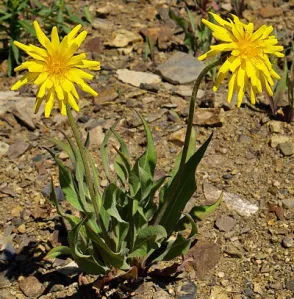
| Agoseris (Agoseris spp.) 🔗source
Uses: - Flowers and leaves are edible raw.
- Dried sap from stem and leaves can be chewed or eaten as gum.
- Varieties in the PNW are Orange agoseris (Agoseris aurantiaca) and Short-beaked agoseris (Agoseris glauca).
- Edible look-alikes: dandelion, salsify.
- Look for agoseris on grassy, open foothills, mountainous slopes and alpine/subalpine areas.
|
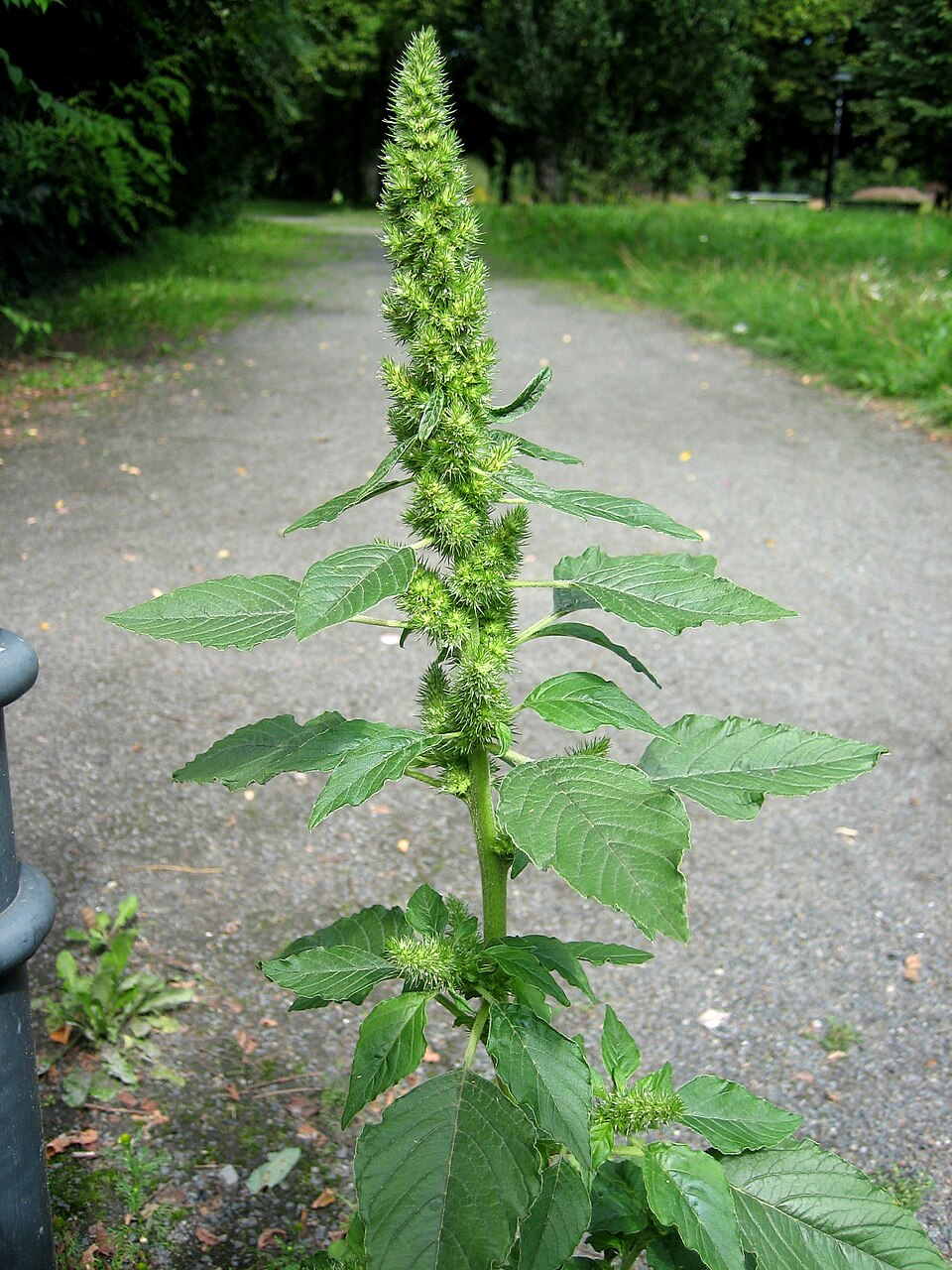
| Amaranth (Amaranthus retroflexus) 🔗source
Uses: - Leaves nearly 6 inches long on large plants; those higher on stem with lance shape and those lower on plant diamond or oval in shape
- Fruit a capsule, containing a single seed.
- Harvest in summer.
- Eat entire plant but most foragers stick to leaves and seeds.
- No poisonous look-alikes.
|
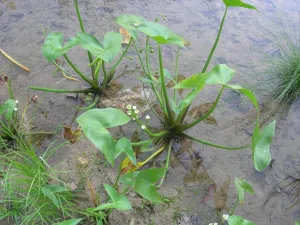
| Arrowhead (Sagittaria spp.) 🔗source
Uses: - Entire rhizome edible. Tubers edible raw. Stems can be cooked.
- Underwater tuber can be dislodged from main roots with toes, floats to top.
- Raw unwashed tubers can be stored for several months.
- Tubers can be cooked, sliced, dried for storage and later boiled.
- Tubers are usually several feet from parent plant.
- Varieties in the PNW are Arum-leaved arrowhead (Sagittaria cuneata) and Wapato (Sagittaria latifolia).
- Grows in calm water in plains, foothills and mountains.
- Warning: Some species can cause skin reactions.
|
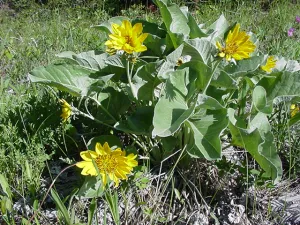
| Arrow-leaved balsamroot (Balsamorhiza sagittata) 🔗source
Uses: - All parts of plant are edible.
- Peeled roots, young stems and leaf stalks are best.
- Roots are sweetest when slow cooked for long periods.
- Cooked roots can be dried for storage; soak overnight to reconstitute.
- Seeds can be dried or roasted and pound into meal.
- Grows on dry stony slopes in foothills.
- Warning: Do not confuse with the poisonous Arnica (Arnica spp.), which can cause internal blistering and severe stomach upset.
|
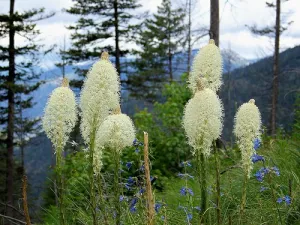
| Beargrass (Xerophyllum tenax) 🔗source
Uses: - Rhizomes are thick and tuberous.
- Rhizomes edible when roasted or boiled.
- Found on dry slopes/ridges or forest clearings.
|
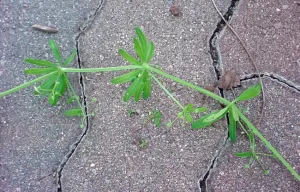
| Bedstraw cleavers (Galium spp.) 🔗source
Uses: - Stem, leaves and flowers of plant can be eaten raw.
- Plant is best when collected before fruiting.
- Raw plant has mild/no taste and older plants have an unpalatable texture.
- Plant is best when cooked.
- Good source of vitamin C.
- Varieties in the PNW are Cleavers (Galium aparine), Northern bedstraw (Galium boreale) and Sweet-scented bedstraw (Galium triflorum).
- Look for bedstraw alongside low-growing vegetation and disturbed soil sites.
- Warning: Acts as a mild laxative when eaten in quantity.
|
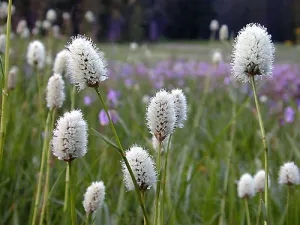
| Bistort (Polygonum spp.) 🔗source
Uses: - Leaves and shoots are edible raw. Rhizome can be eaten raw. Rhizome can be steeped in water, roasted/dried and ground into flour. Small bulblets can be eaten raw.
- Rhizome is suitable for use as a potherb.
- Seeds are edible, roasted whole or ground to meal/flour.
- Plant is rich in vitamin C.
- Grows in moist, open areas on mountainous alpine and subalpine slopes.
- Varieties in PNW are American bistort (Bistorta bistortoides) and Alpine bistort (Bistorta vivipara).
- Warning: Eating raw plants in large quantities can cause diarrhea.
|
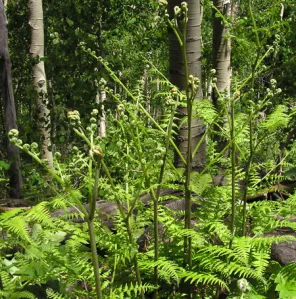
| Bracken (Pteridium aquilinum) 🔗source
Uses: - Spring fiddleheads of all varieties of north temperate ferns are edible. Best when boiled for half an hour in two changes of water.
- Remove hair/wool from fiddleheads, soak in salt water to remove bitterness. Fiddleheads can be dried for storage.
- Rhizomes can be roasted/pit-steamed, peeled and pounded to remove whitish edible part from fibers, or chewed to suck out starch.
- Dried rhizomes can be ground into flour.
- Warnings:
- Avoid long term use, has carcinogenic properties.
- Avoid mature bracken, which destroys vitamin B and can cause a deadly blood condition.
|
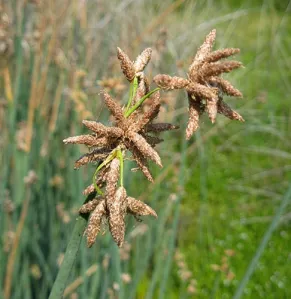
| Bulrush (Schoenoplectus spp.) 🔗source
Uses: - Shoots and lower stalks are edible raw.
- Growing tips of rhizomes are edible raw.
- Crush dried rhizome to remove fibers, grind into flour.
- Fresh rhizomes can be boiled into gruel. The gruel can either be dried and ground into flour or used wet in pancakes/breads.
- Crush and boil young rhizomes to make sweet syrup.
- Press pollen into cakes and baked/mixed with other flours.
- Seeds are edible raw or parched and can be ground into meal.
- Sweet dried sap from the stem can be rolled to balls for storage.
- Varieties in the PNW are Hard-stemmed bulrush (Schoenoplectus acutus) and Soft-stemmed bulrush (Schoenoplectus tabernaemontani).
- Grows in shallow calm water.
|
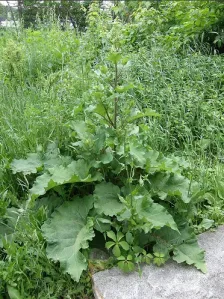
| Burdock (Arctium spp.) 🔗source
Uses: - Young leaves are edible raw.
- Older leaves are best when boiled in 1-2 changes of water with pinch of baking soda.
- Roots of first year plants can be cooked in soup or stir-fry.
- Roots can be mashed and fried as patties. Roots can be dried for storage. Roots can be roasted/ground as coffee substitute. Roots are best when shredded/sliced and soaked in water for 5-10 minutes to reduce harshness.
- White pith of young flower stalks is edible raw.
- Varieties in the PNW are Common burdock (Arctium minus) and Woolly burdock (Arctium tomentosum).
- Look for burdock on disturbed soil sites.
- Warning: Do not confuse with Cocklebur (Xanthium strumarium), which leaves are poisonous if not thoroughly cooked. Cocklebur has rough rather than velvety leaves and has more solid burs.
|
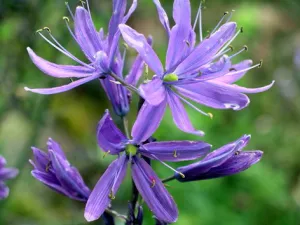
| Blue camas (Camassia spp.) 🔗source
Uses: - Bulbs are edible raw.
- Bulbs can be roasted or boiled, but are best when slow cooked and dried.
- Varieties in the PNW are Great camas (Camassia leichtlinii) and Common camas (Camassia quamash).
- Grows in moist plains and foothill regions.
- Warnings: Do not confuse bulbs with those of the poisonous Death Camases, such as Mountain Death-Camas (Zigadenus elegans) and Meadow Death-Camas (Zigadenus venenosus), which grow in similar areas and have similar looking bulbs, but have white flowers.
|
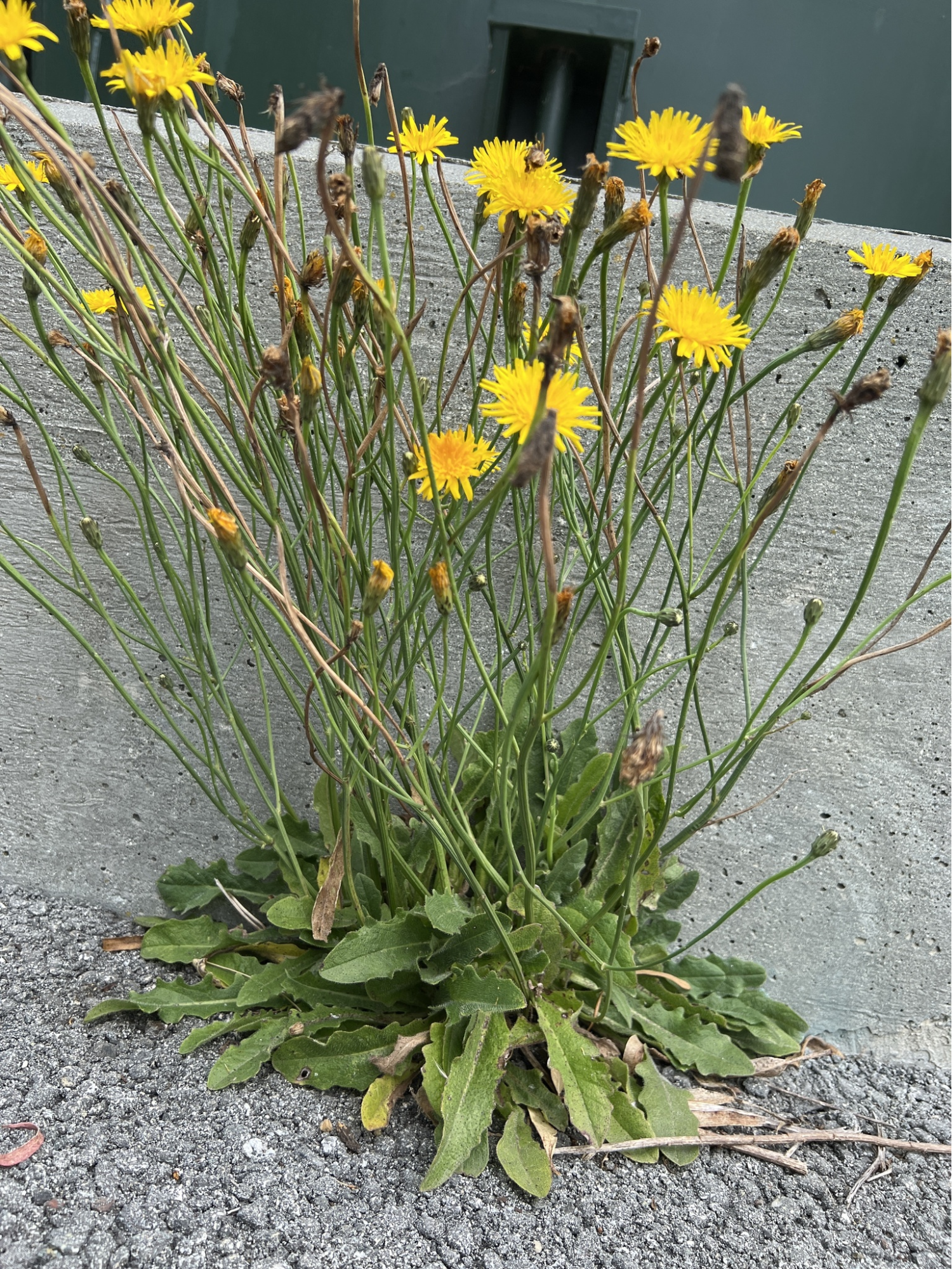
| Cat’s ear (Hypochaeris radicata) 🔗source
Uses: - Use similar to dandelion. They are related.
- Leaves grow up to 8 inches long or longer, lobed, covered in fine hairs.
- Harvest year-round.
- No poisonous look-alikes.
- All parts are edible. Leaves and roots most often harvested.
- If harvesting flowers, take entire stem so plant can redirect energy to root.
|
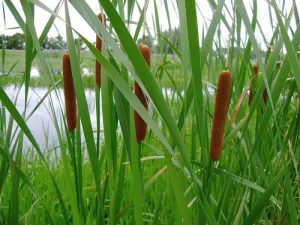
| Cattail (Typha spp.) 🔗source
Uses: - Tender, white inner part of shoots/plants is edible raw.
- Cattail pollen is bright yellow and can be gathered by shaking a pollen-laden spike into a bag, which yields about one tablespoon of powder.
- Pollen can be used as flour, suitable for pancakes, etc.
- Pollen is available to gather before the plant develops its long, brown cylinder resembling a hotdog on a stick.
- Green flower spikes can be cooked, eaten like corn on cob.
- Starchy white core of rhizome can be eaten raw.
- White core can be boiled, baked, or dried and ground into flour, or boiled into syrup.
- Roots can be peeled and crushed under water, the fibers strained out and the starch washed in several changes of water.
- Fluff from the brown-cylinder can be burned to separate and parch the seeds, which are edible.
- Varieties in the PNW are Common cattail (Typha latifolia) and Narrow-leaved cattail (Typha angustifolia).
- Look for cattails growing on the shores of lakes and ponds, in flooded areas and in ditches.
- Warning: Do not confuse young cattail shoots with members of the iris family such as Western blue flag (Iris missouriensis). Mature plants are different enough to avoid confusion.
|
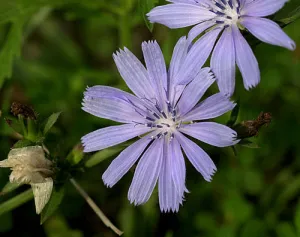
| Chickory (Cichorium intybus) 🔗source
Uses: - Leaves can be eaten raw.
- Leaves are best when young and/or growing in areas protected from direct sunlight.
- Older leaves are best when cooked in several changes of water.
- Young plant, including flower heads can be cooked.
- Roots can be eaten raw when young.
- Roots can be split, dried and roasted to make coffee substitute.
- Look for chicory on disturbed ground, ranging from plains and foothills to mountainous regions.
- Warning: Excessive/prolonged use may damage retinas and cause sluggish digestion.
|
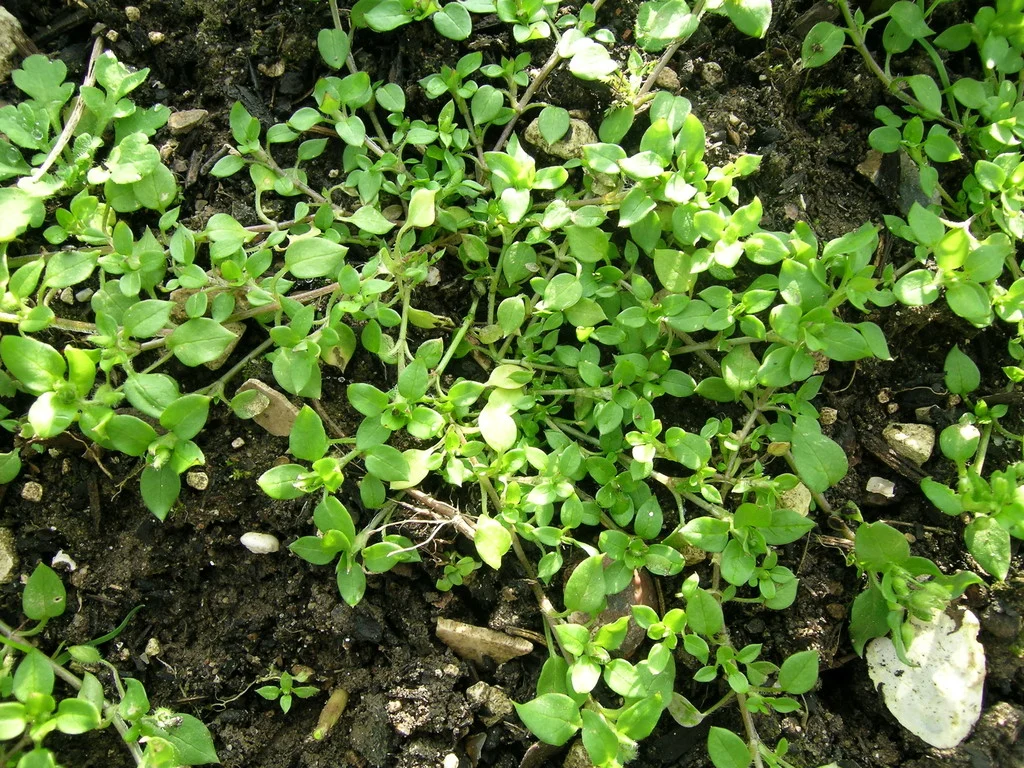
| Chickweed (Stellaria media) 🔗source
Uses: - Small, white flowering annual plant — two to five inches tall and almost always an early visitor to Portland gardens.
- Lush and bright green with star-shaped flowers.
- Seed pods that develop later are fun for kids because they launch spring-shaped seeds when touched.
- High in vitamins C, A, calcium, magnesium and more.
- Tastes like corn silk when raw. Good in salads and sandwiches.
- Add to soups or stews toward end to not overcook.
- Distinguish common chickweed from any look-alikes by finding a single line of hairs running vertically up the stalk in a spiral.
- Tops of this plant can be trimmed and it will continually grow.
- Preparation: The flowers and leaves are great to eat raw and make a unique garnish or addition to salads.
- Warning: Don’t confuse with scarlet pimpernel. Chickweed flowers are white and pimpernel flowers are orange to red.
|
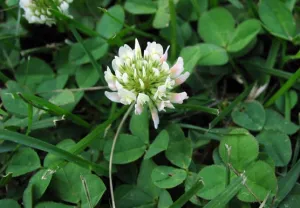
| Clover (Trifolium spp.) 🔗source
Uses: - Above-ground parts can be eaten raw. Sprouts have the best taste.
- Cook or dip in saltwater to counteract bloating.
- Flower heads can be eaten raw, dried or cooked.
- Grind flowerheads and seed heads into flour.
- Creeping stems and roots can be cooked.
- Varieties in the PNW are Red clover (Trifolium pratense), Alsike clover (Trifolium hybridum), White clover (Trifolium repens) and Spring-bank clover (Trifolium wormskioldii).
- Grows in a wide range of terrain, look in disturbed soil areas.
- Warnings:
- Difficult to digest, can cause bloating.
- Red clover in autumn should be avoided or not be eaten in large quantities due to alkaloids.
|
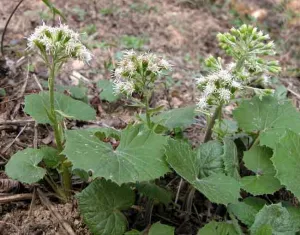
| Coltsfoot (Petasites spp.) 🔗source
Uses: - Roast, boil or stir-fry young stems with flowers.
- Leaves can be cooked like spinach or rolled into tight balls, dried and burned to ash as salt substitute.
- Grows in moist open plains, foothills and mountains.
- Varieties in PNW are Arrow-leaved coltsfoot (Petasites sagittatus), Palmate Coltsfoot (Petasites frigidus var palmatus), Sweet coltsfoot (Petasites frigidus var frigidus).
- Warnings: Should not be eaten in large quantities, due to alkaloids. May cause miscarriage in pregnant women if eaten in quantity.
|
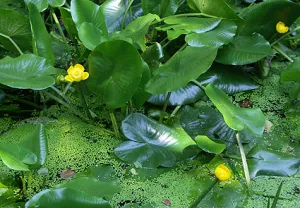
| Cow-lily (Nuphar spp.) 🔗source
Uses: - Seeds are edible after drying, popping, or frying and can subsequently be ground to flour.
- Seeds can be taken from dried capsules.
- Rhizome edible after prolonged boiling with several changes of water.
- Rhizome can be roasted or boiled, then peeled and either eaten or thinly sliced for drying and then either stored or ground into flour .
- Varieties in PNW are Yellow cow-lily (Nuphar lutea) and Western cow-lily (Nuphar polysepala).
- Grows in shallow, calm water in plains, mountainous and subalpine regions.
- Warning: Eat in moderation, large amounts may be poisonous.
|
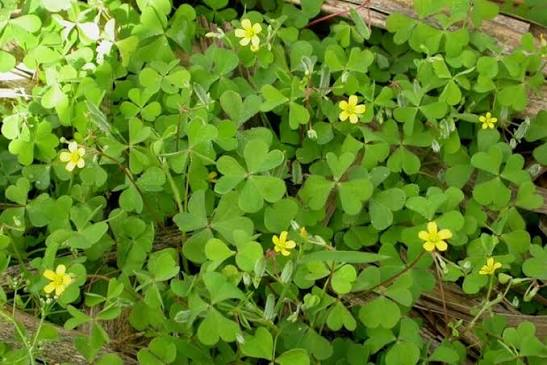
| Creeping wood sorrel (Oxalis corniculata) 🔗source
Uses: - Low growing, spreading plant. Spreads by above ground horizontal stems called stolons.
- Mature plants form small mounded clumps commonly 4-8 inches high.
- Foliage has 3 heart-shaped leaflets. Foliage is usually green to reddish purple in color.
- Edible leaves, stems and flowers. Good in salads and sandwiches. No poisonous look-alikes.
- Warning: Eat in moderation, large amounts of oxalates.
|
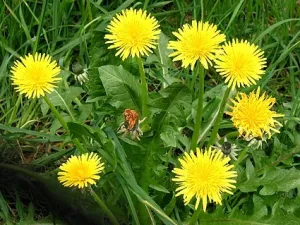
| Dandelion (Taraxacum officinale) 🔗source
Uses: - All parts of plant are edible raw.
- Young leaves or those growing where there is less/no sunlight are the least bitter.
- Older leaves are best when boiled in 2 changes of water and/or with mid-veins removed.
- Roots are best when collected in spring/autumn, peeled, sliced and cooked in 2 changes of water with pinch of baking soda.
- Roots can be roasted as coffee substitute.
- Unopened flower buds can be eaten raw or cooked.
- Seeds with the parachute removed can be eaten or ground into flour.
- A serving of dandelion greens contains the same amount of calcium as half a cup of milk.
- Good source of potassium, vitamin A and vitamin C.
- Grows in a wide range of terrain, look for dandelions in disturbed/cultivated soil areas.
|
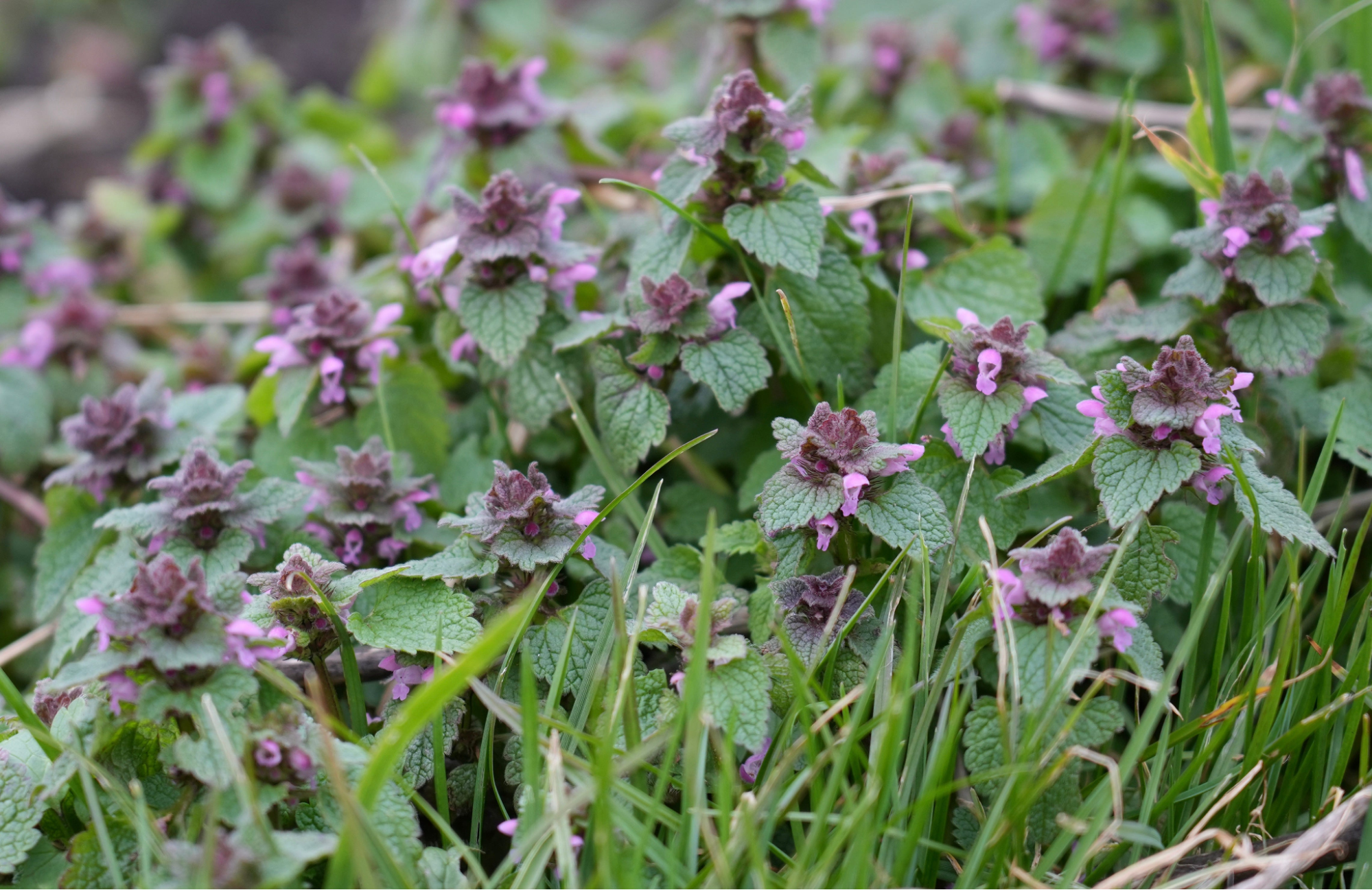
| Dead nettle (Lamium purpureum) 🔗source
Uses: - Grows up to 12 inches tall. Stems square; leaves opposite, round to triangular, sparsely hairy with scalloped edges.
- No poisonous look-alikes.
- For best flavor, gather top third of plant (typically, red-to-purple portion)
- High in iron. High antioxidants in seed oil have been studied for use as food supplement.
- Strong smell and flavor when uncooked. When cooked, tastes similar to stinging nettle.
- Use raw in salads or sandwiches.
|
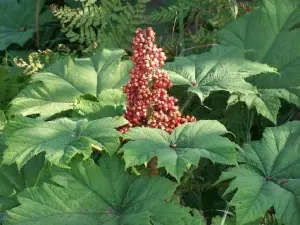
| Devils club (Oplopanax horridus) 🔗source
Uses: - Roots can be cooked and eaten.
- Young fleshy stems are edible when cooked.
- Young leaves lack stiff spines and can be eaten raw.
- Berries are not edible.
- Grows in moist areas that are shaded from the sun, in both foothill and mountainous regions.
- Warning: Plant spines can cause infections or allergic reactions.
|
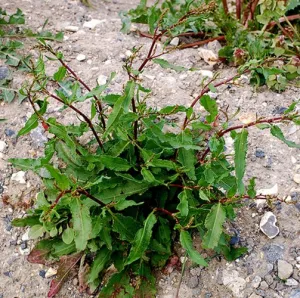
| Dock (Rumex spp.) 🔗source
Uses: - Young leaves are edible raw, but sour.
- Leaves best when boiled in several changes of water.
- Fruit can be winnowed to separate the outer hull for collecting seeds.
- Seeds can be boiled to mush, or ground into flour.
- Seeds can be leeched in cold water before using as food.
- Varieties in the PNW are Curled dock (Rumex crispus), Western dock (Rumex occidentalis) and Willow dock (Rumex triangulivalvis).
- Grows in moist areas and disturbed sites in the plains, foothills and mountainous regions.
- Warning: Raw plant is toxic in large quantity due to oxalates, which interferes with nutrient absorption.
|
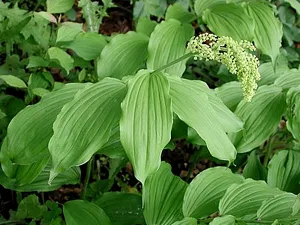
| False Solomon’s-seal (Maianthemum spp.) 🔗source
Uses: - Berry is edible.
- Berry transitions from green to mottled/dark red.
- Berry was traditionally stored in cooled grease.
- Berry is high in vitamin C.
- Young shoots and green parts of young plants are edible and best when cooked.
- Rhizome is edible when cooked.
- Varieties in the PNW are False Solomon’s-seal (Maianthemum racemosum) and Star-flowered false Solomon’s-seal (Maianthemum stellatum).
- Grows in thickets, forests and moist open areas.
|
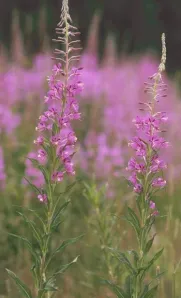
| Fireweed (Epilobium spp.) 🔗source
Uses: - Shoots are edible raw.
- Young leaves are edible raw.
- Flowers are edible raw.
- Flower bud clusters can be cooked as vegetable.
- Stem pith can be added to soups as thickener.
- Varieties in the PNW are Common fireweed (Epilobium angustifolium) and Dwarf fireweed (Epilobium latifolium).
- Grows in open, disturbed areas in foothill, mountainous alpine and subalpine regions.
- Warning: May act as a laxative if eaten in quantity.
|
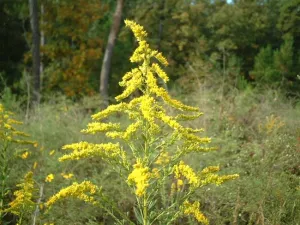
| Goldenrod (Solidago spp.) 🔗source
Uses: - Plants can be cooked.
- Flowers are edible raw.
- Seeds are edible raw.
- Varieties in the PNW are Canada goldenrod (Solidago canadensis), Giant goldenrod (Solidago gigantea), Missouri goldenrod (Solidago missouriensis) and Northern goldenrod (Solidago multiradiata).
- Grows in open plains, foothills and mountainous regions.
|
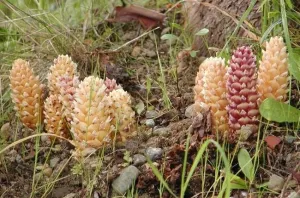
| Groundcone (Boschniakia spp.) 🔗source
Uses: - Potato-like stem base is edible raw.
- Varieties in the PNW are Vancouver groundcone (Boschniakia hookeri) and Northern ground-cone (Boschniakia rossica).
- Grows in shaded coastal forests at the base of alders, salal or cranberry bushes.
|
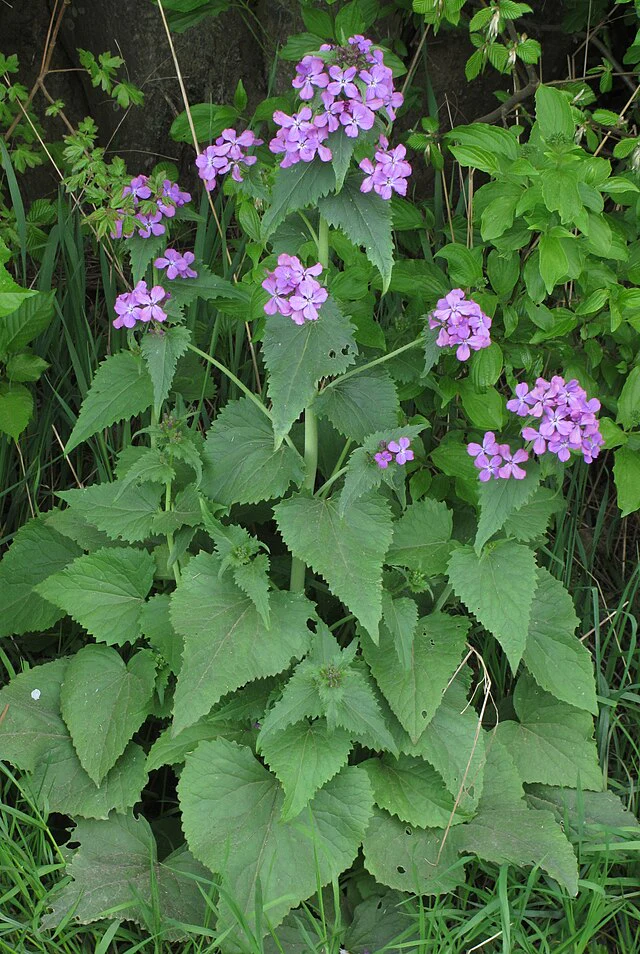
| Honesty (Lunaria annua) 🔗source
Uses: - Pick leaves starting in April. Harvest flowers May through July. Collect young seedpds from late May until they become too tough to cook. Seeds ripen July to August.
- Edible leaves, young seedpods and roots.
- Collect roots with a stout trowel or shovel.
- No poisonous look-alikes.
- Tastes similar to broccoli, cabbage and mustard greens.
- Eat cooked or raw. Use seeds as a mustard-seed substitute.
|
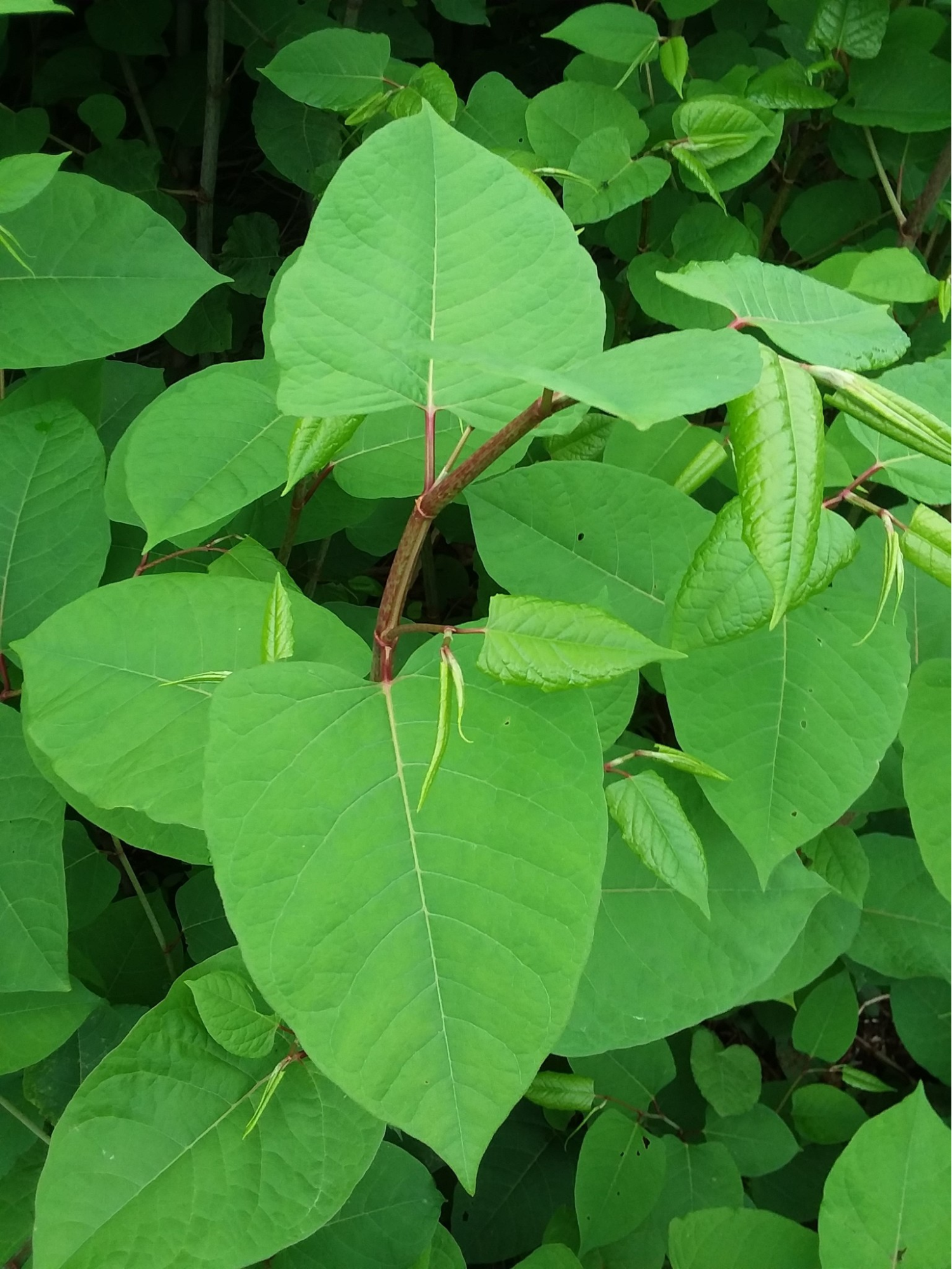
| Japanese knotweed (Fallopia japonica) 🔗source
Uses: - Harvest in early spring.
- Edible young shoots, young leaves and roots.
- Snip at ground level with scissors.
- No poisonous look-alikes.
- Provides potassium, phosphorus, zinc and manganese.
- Contains oxalic acid.
- Tart flavor often compared to rhubarb
- Use as substitute for any recipe with rhubarb
- Remote outer skin prior to eating
- Slice stems and steam as a vegetable; simmer in soups, sauces, fruit compotes and jam; or bake in desserts.
|
| Knotweed (Polygonum spp.) 🔗source
Uses: - Seeds are edible.
- Seeds can be eaten whole or pounded into meal.
- Plants can be cooked and eaten.
- Varieties in the PNW are Common knotgrass (Polygonum aviculare), Common knotweed (Polygonum arenastrum) and Mountain knotweed (Polygonum douglasii).
- grows as a weed in a wide range, including dry areas, plains and subalpine regions.
- Raw plants eaten in quantity may cause stomach upset and/or diarrhea.
|
| Lamb’s quarter / pigweed (Chenopodium album) 🔗source
Uses: - Plants can be eaten raw.
- Flower clusters can be eaten raw.
- Seeds are edible raw.
- Seeds can be ground into a bitter black flour.
- Seeds are best cooked before being ground.
- Grows in disturbed/cultivated areas in plains, foothills and mountainous regions.
- Warning: Seeds eaten in quantity may be toxic. Raw plants should be eaten moderately due to oxalates, which interferes with nutrient absorption.
|
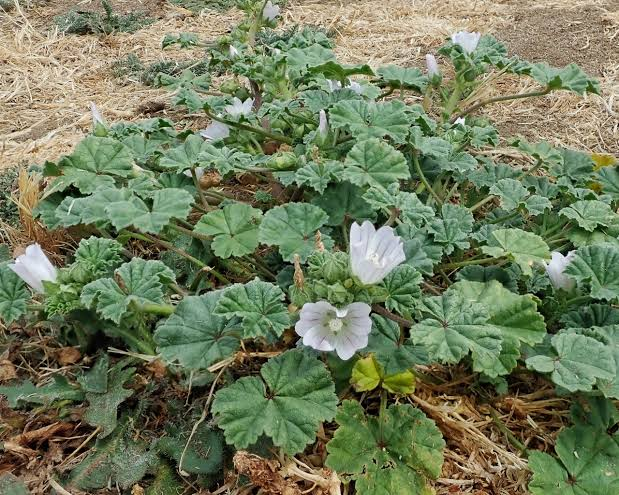
| Mallow (Malva neglecta) 🔗source
Uses: - Summer and winter annual or biennial with a deep tap root, hairy, kidney shaped leaves, low spreading stems growing four to 20-inches high and five-petal flowers that range from white to pink or lilac.
- Fruits are round and look like a small wrapped wheel of cheese.
- All parts of the plant are edible although the fruit is the easiest to prepare and probably the most palatable for beginners.
- No poisonous look-alikes.
- Mild, pleasant flavor.
- Gather by hand. Use shovel to harvest roots.
|
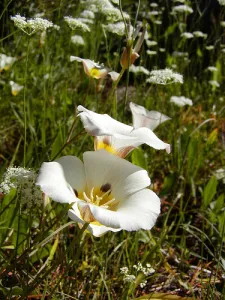
| Mariposa-lily (Calochortus spp.) 🔗source
Uses: - Bulbs are edible raw.
- Bulbs are best when cooked.
- Bulbs can be dried for storage.
- Dried bulbs can be boiled for soups or ground into flour.
- Variety in the PNW is Three-spotted mariposa lily (Calochortus apiculatus).
- Grows in foothill and mountainous regions.
|
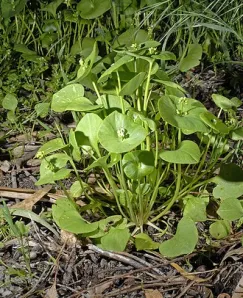
| Miner’s lettuce (Montia perfoliata) 🔗source
Uses: - All parts of the plant, including roots, are edible raw.
- Grows in moist shaded woods and fields.
|
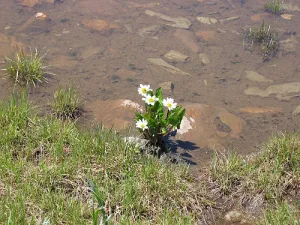
| Marsh-marigold (Caltha spp.) 🔗source
Uses: - Leaves are edible when cooked; boil 10-60 minutes, until tender.
- Roots can be cooked and eaten.
- Varieties in the PNW are White marsh-marigold (Caltha leptosepala) and Yellow marsh-marigold (Caltha palustris).
- Grows in wet, open areas in mountainous, subalpine and alpine regions.
- Warning: Eat in moderation. Avoid uncooked young leaves and flowers.
|
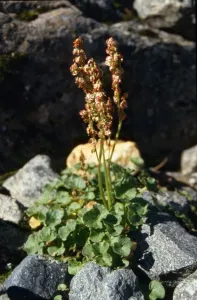
| Mountain sorrel (Oxyria digyna) 🔗source
Uses: - Leaves are edible raw.
- Chop leaves into water with sugar to make lemonade-like drink.
- Plants can be cooked.
- Plants were traditionally boiled with berries and/or salmon roe and poured into thin cakes.
- Grows in moist, open areas in mountainous and alpine regions.
- Warning: Eat raw plant in moderation due to oxalates, which interfere with nutrient absorption.
|
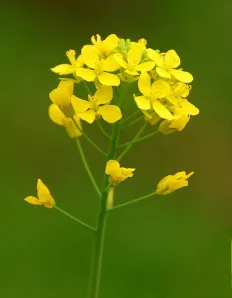
| Mustard (Brassicaceae) 🔗source
Uses: - Edible as cooked greens.
- Boil older plants in two changes of water to reduce bitterness.
- Varieties in the PNW are True mustards (Brassica spp.), Winter-cresses (Barbarea spp.), Tansy mustards (Descurainia spp.) and Tumble-mustards (Sisymbrium spp.).
- Grows in open, disturbed areas in plains, foothills and mountainous regions.
|
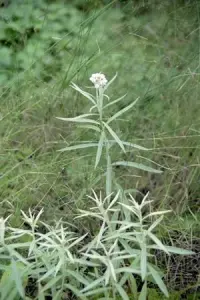
| Pearly everlasting (Anaphalis margaritacea) 🔗source
Uses: - Leaves and young plants can be cooked.
- Eaten raw, has an earthy, slightly musky and astringent flavor.
- Grows in open, disturbed areas in foothill, mountainous and subalpine areas.
|
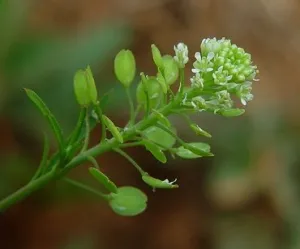
| Peppergrass (Lepidium virginicum) 🔗source
Uses: - Leaves are edible raw.
- Green seed pods are edible raw.
- Seeds edible. Used as a pepper-like seasoning.
- Grows on roadsides and disturbed areas.
|
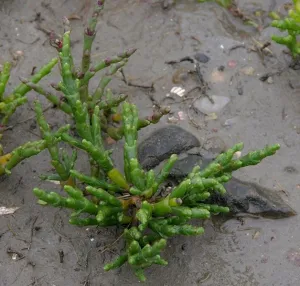
| Pickleweed glasswort / sea asparagus (Salicornia spp.) 🔗source
Uses: - Plant is edible raw but better when cooked/boiled.
- Harvest top half of stems to allow bottom to grow new shoots.
- Plant has a salty taste.
- Plant is best when gathered before flowering.
- Varieties in the PNW are Red Glasswort (Salicornia rubra) and American Glasswort (Salicornia virginica).
- Grows in saltwater marshes and in the salty soil near high-tide areas.
|
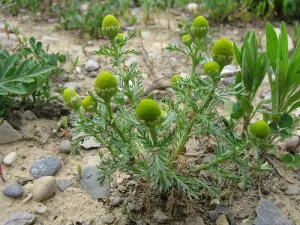
| Pineapple-weed (Matricaria discoidea) 🔗source
Uses: - Flowers and leaves grow June through September.
- No poisonous look-alikes.
- Flower heads are edible raw.
- Plants can be eaten raw, though bitter.
- Plants can be powdered and sprinkled on meat to reduce spoilage and keep away flies.
- Flowers and foliage often compared to chamomile or pineapple. Greens may become bitter after plants bloom.
- Grows on roadsides and disturbed ground in plains, foothills and mountainous regions.
- Use young flower buds in salads or fresh or dried to make tea. Use in desserts for a delicate hint or chamomile or pineapple flavor.
|
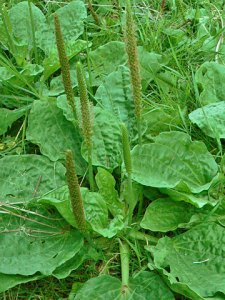
| Plantain (Plantago spp.) 🔗source
Uses: - Young leaves can be eaten raw.
- Leaves are best finely chopped or when cooked with fibers removed.
- Seeds can be dried and ground into flour/meal.
- Varieties in the PNW are Common Plantain (Plantago major) and Narrow-leaved Plantain (Plantago lanceolata).
- Grows in a wide range of areas, including disturbed/cultivated soil in plains, foothills and mountainous regions.
|
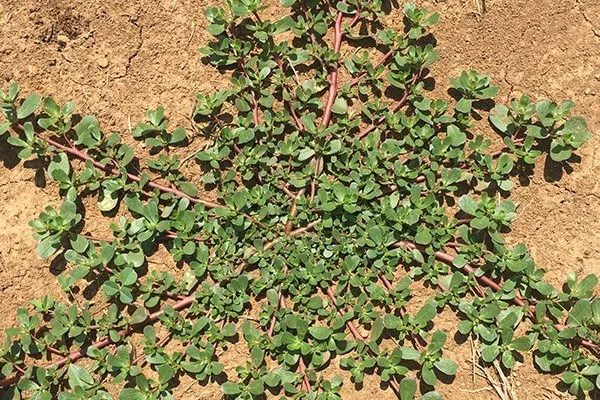
| Purslane (Portulaca oleracea) 🔗source
Uses: - Common garden and urban weed.
- Harvest June through October.
- Edible leaves, stems, flower buds, flowers and seeds. Edible both raw and cooked.
- Excellent addition to salads or smoothies. Leaves provide a mucilaginous quality that makes them good to thicken soups and stews.
- Recipes include pickled purselane and purselane relish.
- Warning: Several low-growing spurges share characteristics with purselane, but they are easily distinguished by thinner leaves and milky sap. Purslane has thickened leaves and lacks milky sap.
|
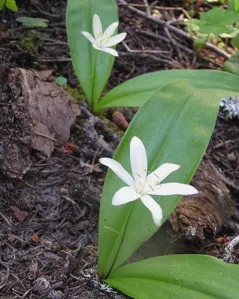
| Queen’s Cup (Clintonia uniflora) 🔗source
Uses: - Young leaves are edible.
- Raw leaves have mild sweet taste.
- Older leaves are best when cooked.
- Grows in shady forest areas.
|
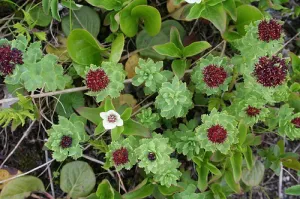
| Roseroot (Rhodiola spp.) 🔗source
Uses: - Young leaves and shoots are edible raw.
- Older plants may be bitter.
- Rhizome can be boiled and eaten.
- The variety in the PNW is Western roseroot (Rhodiola integrifolia).
- Grows in dry, rocky areas in subalpine and alpine regions.
|
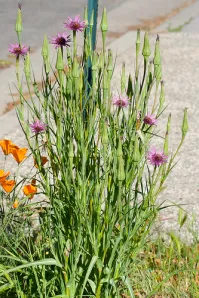
| Salsify / Goatsbeard (Tragopogon spp.) 🔗source
Uses: - Roots are edible raw.
- Roots can be dried and ground.
- Roots can be roasted as coffee substitute.
- Young leaves can be eaten raw.
- Young stalks and root crowns can be simmered.
- Varieties in the PNW are Commom salsify (Tragopogon porrifolius), Yellow salsify (Tragopogon dubius), Meadow salsify (Tragopogon pratensis).
- Grows in dry, disturbed areas.
|
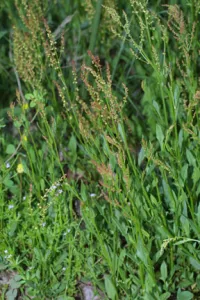
| Sheep sorrel (Rumex acetosella) 🔗source
Uses: - Leaves are edible raw.
- Raw leaves may have bitter taste.
- Leaves are best when boiled in several changes of water.
- Warning: Eat only moderate quantities of the raw plant due to oxalates, which block nutrient absorption.
|
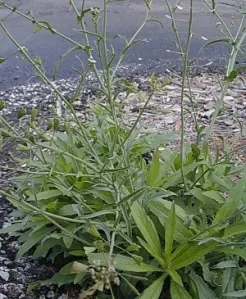
| Shepherd’s-purse (Capsella bursa-pastoris) 🔗source
Uses: - All parts of plant are edible raw.
- Older plants can be tenderized by adding pinch of baking soda to cooking water.
- Pods and seeds are edible and taste peppery.
- Seeds can be parched and ground to flour.
- Roots can be eaten fresh or dried.
- Burning the plant results in ash that can be used as salt substitute and/or tenderizer.
- Grows in a wide range as a weed, especially in disturbed or cultivated areas.
- Warning: Seeds may blister skin.
|
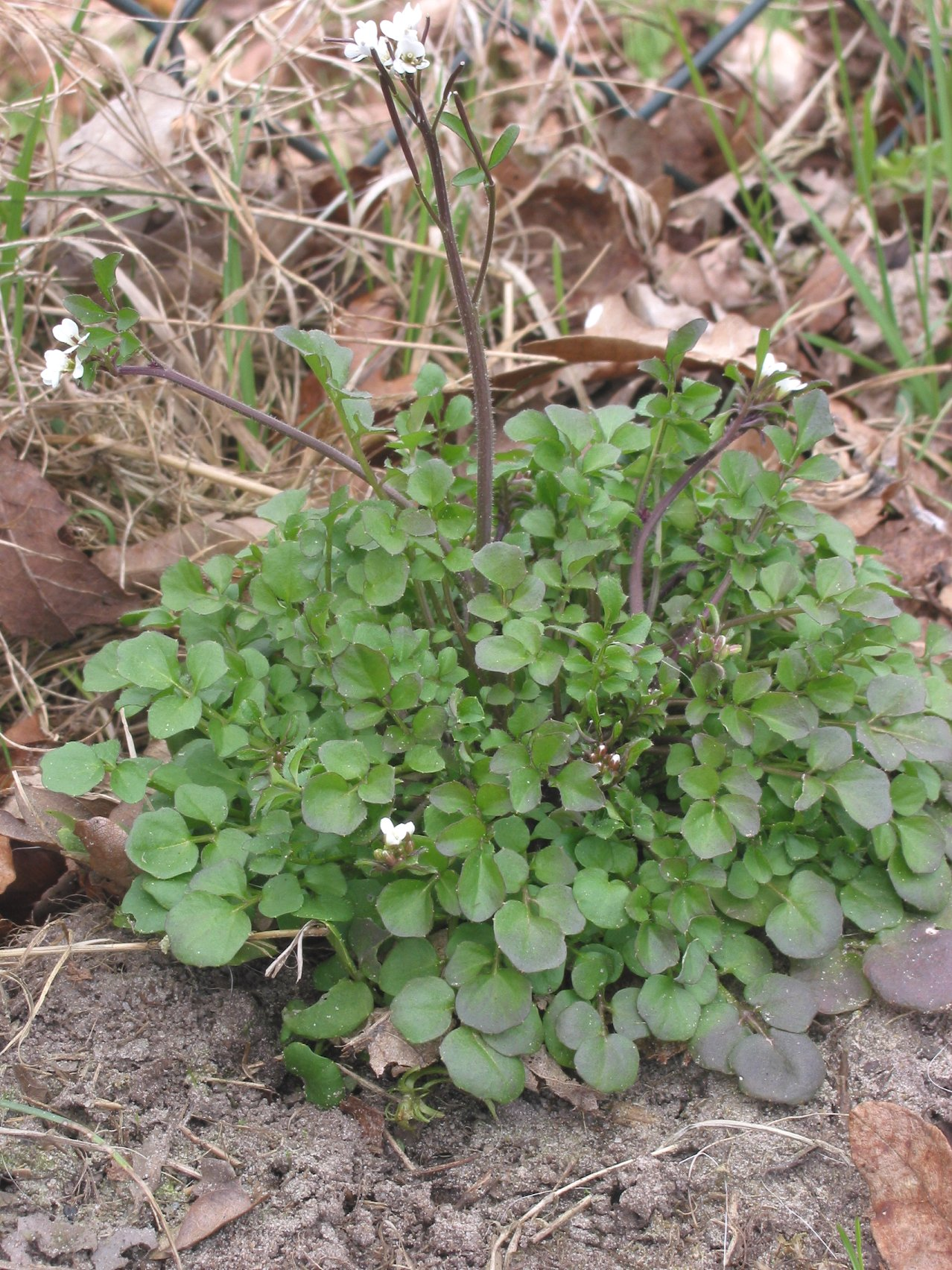
| Shotweed (Cardamine hirsuta) 🔗source
Uses: - Entire plant edible. Roots less palatable and more difficult to clean than rest of plant.
- Pull entire plant up with one hand, then use other hand to twist roots off before placing plant in a bowl. This method keeps harvests cleaner.
- No poisonous look-alikes.
- High in vitamin C.
- Tastes similar to watercress or nasturtiums.
- Most delicious raw in salads and sandwiches.
|
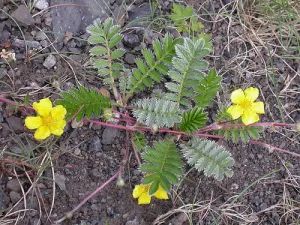
| Silverweed cinquefoil (Argentina spp.) 🔗source
Uses: - Rhizomes are edible raw, though possibly bitter.
- Rhizomes are best when roasted, boiled, or fried for several minutes.
- Roots can be dried for storage.
- Roots are best when collected in autumn or spring.
- Varieties in the PNW are Common silverweed (Argentina anserina) and Pacific Silverweed (Argentina pacifica).
- Grows in moist, open areas in plains, foothills and mountainous regions.
|
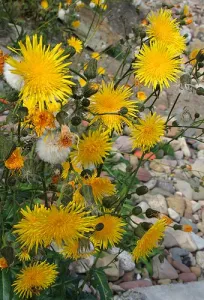
| Sow thistle (Sonchus spp.) 🔗source
Uses: - Young leaves are edible raw.
- Young leaves are best after boiling in at least one change of water.
- Varieties in the PNW are Perennial sow thistle (Sonchus arvensis), Prickly sow thistle (Sonchus asper) Annual sow thistle (Sonchus oleraceus).
- Grows by roadways and in disturbed areas.
|
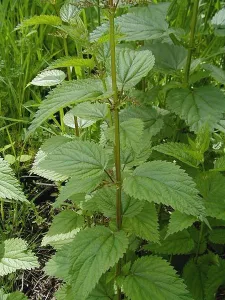
| Stinging nettle (Urtica dioica) 🔗source
Uses: - Young leaves are edible raw, though they will sting in the mouth for a short time.
- Young shoots and young plants are edible when steamed/cooked.
- Roots are edible when cooked.
- Roots are best when collected in spring/autumn.
- Grows in moist soil and disturbed areas in plains, foothills and mountainous regions.
- Warning: Wear gloves when collecting to avoid stings.
|
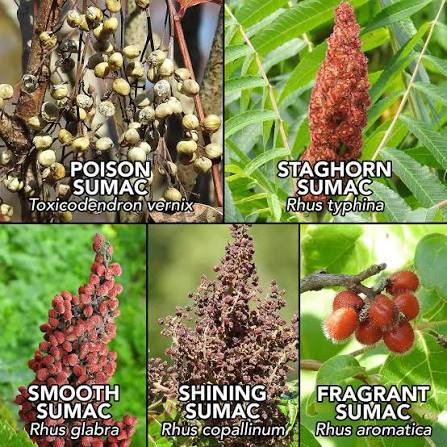
| Staghorn sumac (Rhus typhina) 🔗source
Uses: - Lick your fingers after touching the berries. If they are sour and lemony, they are ready to harvest. If they are bland or smell overly dusty, pass them by
- Use garden shears or scissors to snip the cones off just below the base
- Do not wash the stags: The citrus flavor you are after is on the dusty, red outer coating and dissolves very easily in water. Rinsing the clusters will literally wash away your tea.
- Debris removal: Once you get home, gently shake or brush the cones to remove loose dust, stems and any hidden insects.
- Warning: Avoid poison sumac, which grows in wet, swampy areas and features drooping clusters of white or pale green berries.
|
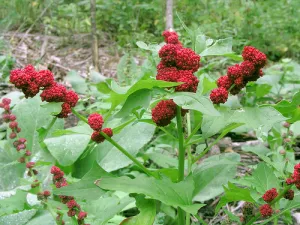
| Strawberry-blite (Chenopodium capitatum) 🔗source
Uses: - Young plants including flowers are edible raw.
- Grows in open or disturbed areas in foothills, mountainous and subalpine regions.
- Warning: Seeds eaten in quantity may be toxic. Raw plants should be eaten moderately due to oxalates, which prevent nutrient absorption.
|
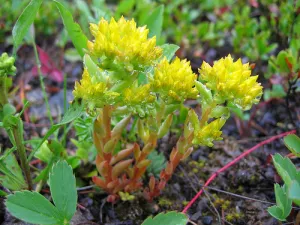
| Stonecrop (Sedum spp.) 🔗source
Uses: - Young leaves and shoots are edible raw.
- Older plants may be bitter.
- Rhizome can be boiled and eaten.
- Varieties in the PNW are Lance-leaved stonecrop (Sedum lanceolatum) and Spreading stonecrop (Sedum divergens).
- Grows in dry, rocky areas in subalpine and alpine regions.
|

| Sunflower (Helianthus spp.) 🔗source
Uses: - Sprouts are edible.
- Seeds can be eaten raw.
- Seeds can be dried, parched, ground lightly to break shells and placed in water to separate shells from kernels.
- Shells can be roasted to make coffee substitute.
- Kernels can be ground into meal.
- Kernels can be boiled in water to make gruel.
- Kernels can be mixed with bone marrow or grease to make cakes.
- Crushed seeds can be boiled in water and oil collected by skimming the surface.
- Varieties in the PNW are Common sunflower (Helianthus annuus) and Prairie sunflower (Helianthus petiolaris).
- Grows in open sites and disturbed areas.
|
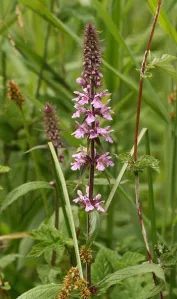
| Swamp hedge-nettle / marsh woundwort (Stachys palustris) 🔗source
Uses: - Rhizome is edible raw.
- Rhizome is best when collected in autumn.
- Roots can be dried and ground to make flour.
- Young shoots can be cooked, though poor smelling.
- Flowers are edible.
- Seeds are edible.
- Grows in moist plains and foothill regions.
|
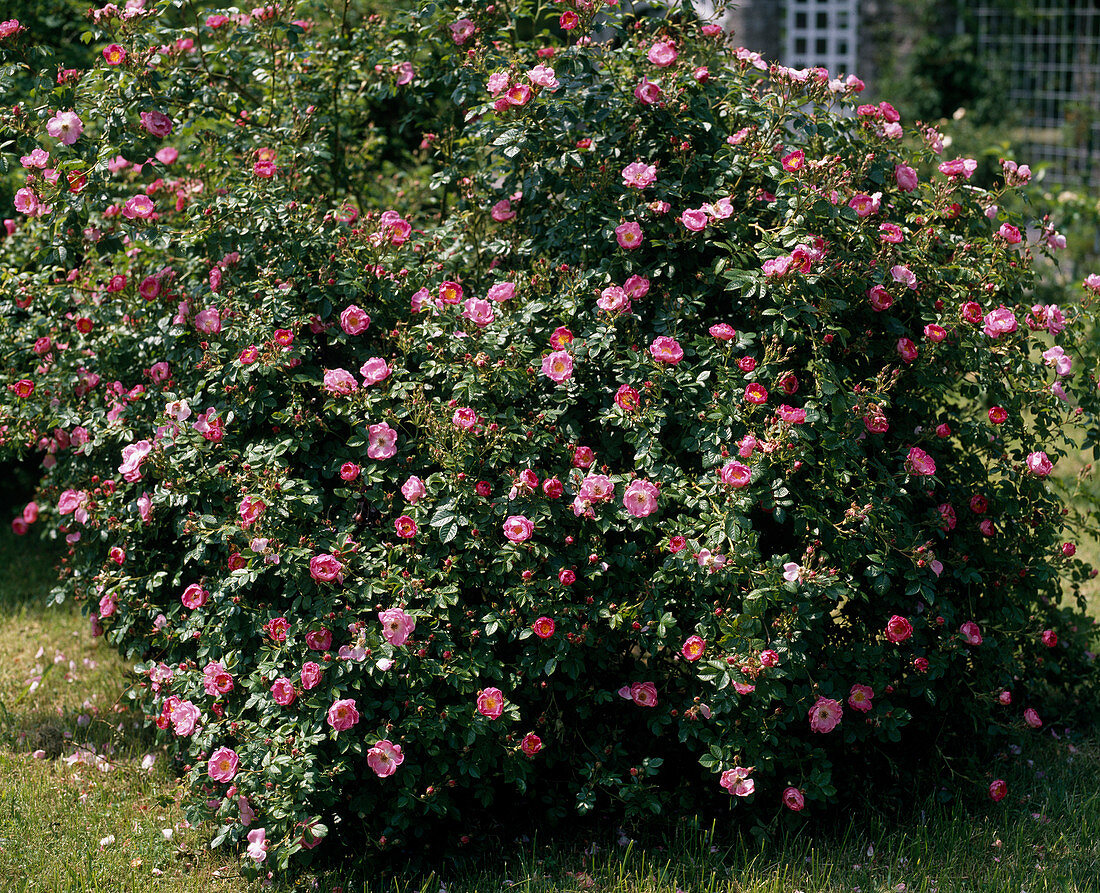
| Sweetbriar rose (Rosa rubiginosa, Rosa eglanteria or Rosa mosqueta) 🔗source
Uses: - Edible rose hips, petals, young shoots and young leaves.
- No poisonous look-alikes.
- Gather petals, shoots and leaves any time they are present.
- Harvest hips after first frost when they’re fully colored but not overripe.
- Rose hips are fruity and spicy, not unlike cranberry.
- Hips and petals can be preserved by canning.
- Use petals raw on salads as garnish and candy them or make rose petal jelly.
- Use rose hips for herbal tea, jam, jelly, syrup, soup, beverages, pies, bread, wine, chutney and marmalade. Can be eaten raw like a berry.
|
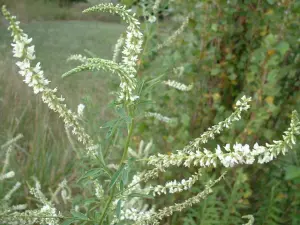
| Sweet clover, common (Melilotus officinalis) 🔗source
Uses: - Young leaves gathered before flowering can be eaten raw.
- Seeds and flowers can be used as flavoring.
- Grows in disturbed sites.
- Warning: Do not ingest moldy plants due to the presence of dicoumarol, which reduces the ability of blood to coagulate.
|
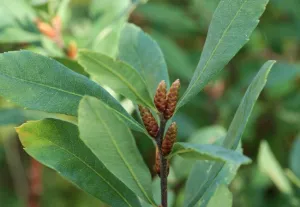
| Sweetgale “Bog Myrtle" (Myrica gale) 🔗source
Uses: - Leaves are edible raw.
- Leaves and nut-lets are suitable for soups and cooking.
- Leaves can be used to repel insects.
- Grows in thickets and moist areas at low elevations.
- Warning: Should not be consumed by pregnant women, since it can induce abortions.
|
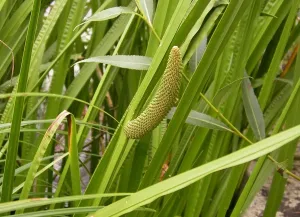
| Sweetflag (Acorus spp.) 🔗source
Uses: - Rhizome is edible raw.
- Rhizome can be made tender by prolonged boiling.
- Rhizome is best when peeled and cooked, either by boiling or roasting.
- Central core of young shoots is edible raw.
- Young spadix is edible raw.
- Plant is an effective insect repellent.
- Variety in the PNW is American sweetflag (Acorus americanus).
- Grows in marshes, quiet water and wet, open areas.
|
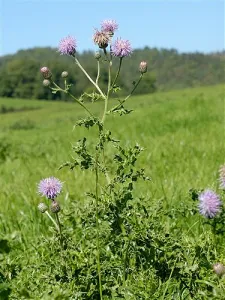
| Thistle (Cirsium spp.) 🔗source
Uses: - Roots of unbolted young plants in autumn are edible raw but may cause gas.
- Roots are best when boiled or roasted.
- Roots contain the starch insulin, which breaks down into a sugar when cooked.
- Cooked roots can be dried and ground to flour.
- Stems and leaves edible raw after peeling to remove prickles.
- Immature flowerheads are edible raw, but best when steamed.
- Varieties in the PNW are Canada/Creeping thistle (Cirsium arvense), Bull thistle (Cirsium vulgare), Indian thistle (Cirsium brevistylum), Hooker’s thistle (Cirsium hookerianum) and Leafy thistle (Cirsium foliosum).
- Grows across wide range, in plains, foothills, mountainous and subalpine regions.
- Warning: Eat in moderation, some thistles are carcinogenic.
|
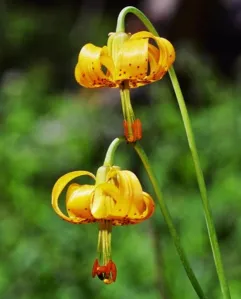
| Tiger lily / Columbia lily (Lilium columbianum) 🔗source
Uses: - Flowers, seeds and bulbs are edible raw.
- Bulbs are best when boiled in several changes of water, though still bitter/peppery.
- Cooked bulbs can be dried whole or mashed and then dried for storage.
- Grows on foothill, mountainous and subalpine slopes.
|
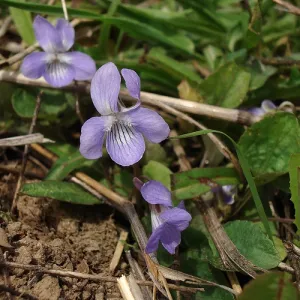
| Violet (Viola spp.) 🔗source
Uses: - Plants are edible raw.
- varieties in the PNW are Early blue violet (Viola adunca), Canada violet (Viola canadensis), Wild Pansy (Viola tricolor), Marsh violet (Viola palustris) and Yellow prairie violet (Viola nuttallii).
- Grows in plains, foothills, mountainous and subalpine regions.
|
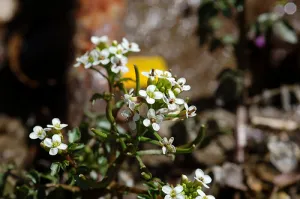
| Watercress (Rorippa nasturtium-aquaticum) 🔗source
Uses: - Plants are edible raw.
- Tastes like peppery lettuce or radishes.
- Can be dried for storage.
- Grows in calm water.
- Warning: Do not eat plants from sites with polluted water.
|
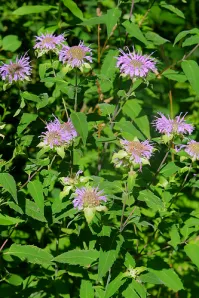
| Wild bergamot horsemint (Monarda fistulosa) 🔗source
Uses: - Plant can be cooked as potherb.
- Smells strongly of mint.
- Leaves can be dried and sprinkled on meat to repel insects.
- Grows in open plains, foothill and mountainous regions.
|
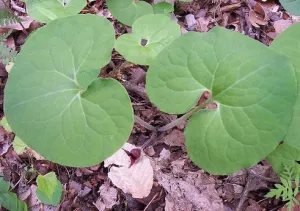
| Wild ginger (Asarum spp.) 🔗source
Uses: - Rhizome is edible raw.
- Rhizome can be dried and ground.
- The variety in the PNW is Western wild ginger (Asarum caudatum).
- Grows in moist, shaded foothill and mountainous regions.
|
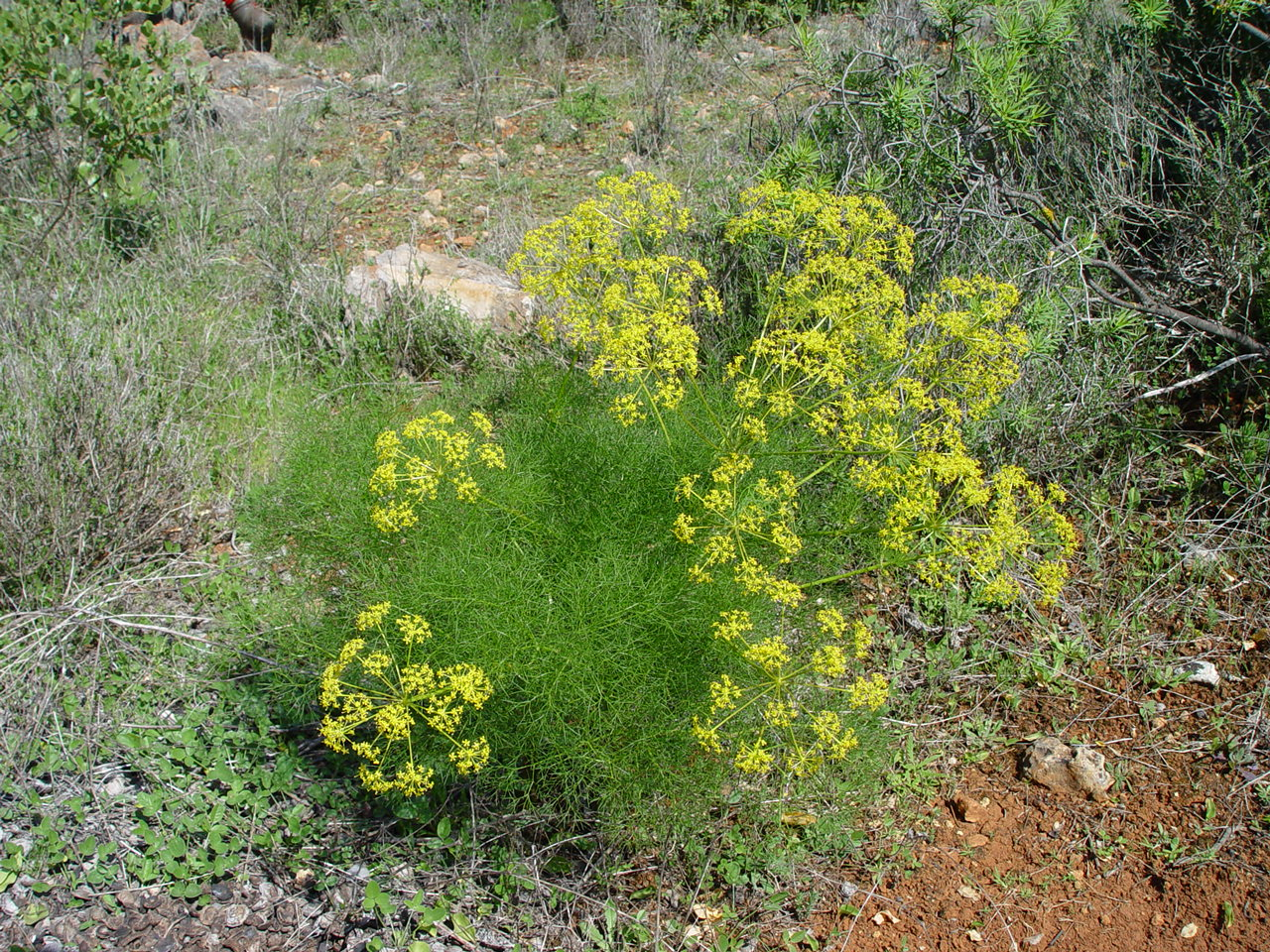
| Wild fennel (Foeniculum vulgare) 🔗source
Uses: - Collect leaves in early spring, but younger growth can be harvested all summer.
- Stems collected in late summer, fruits in fall and early winter.
- Collect pollen by shaking each flower gently into a bag.
- Most flavor fruits are those nearest center of each umbrel.
- Use fennel seeds in soups and stews. Boil or steam root to reduce intensity. Add friends to salads. Add fronds to soup and salads before serving.
- Warning: Don’t confuse with poison hemlock and the poisonous water hemlock. Fennel smells like anise or licorice. Poison hemlock smells musty or mouselike.
|
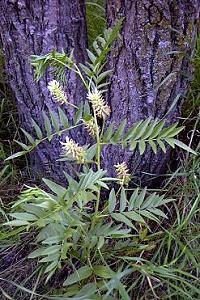
| Wild licorice (Glycyrrhiza lepidota) 🔗source
Uses: - Rhizome is edible raw.
- Rhizome was traditionally roasted in coals, pounded to remove tough fibers from the center of the rhizome, and eaten.
- Grows near water in moist, well-drained sites in plains and foothills.
- Warning: Large amounts consumed over time are toxic.
|
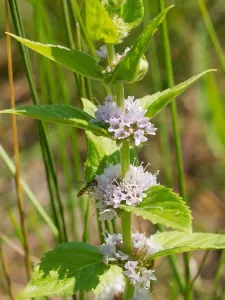
| Wild mint (Mentha spp.) 🔗source
Uses: - Plants are edible raw.
- Best used to improve flavor of other food.
- Powdered leaves can be sprinkled on berries/drying meat to repel insects.
- Varieties in the PNW are Wild mint (Mentha arvensis), Spearmint (Mentha spicata), Peppermint (Mentha piperita).
- Grows in moist areas in plains, foothills and mountainous regions.
|
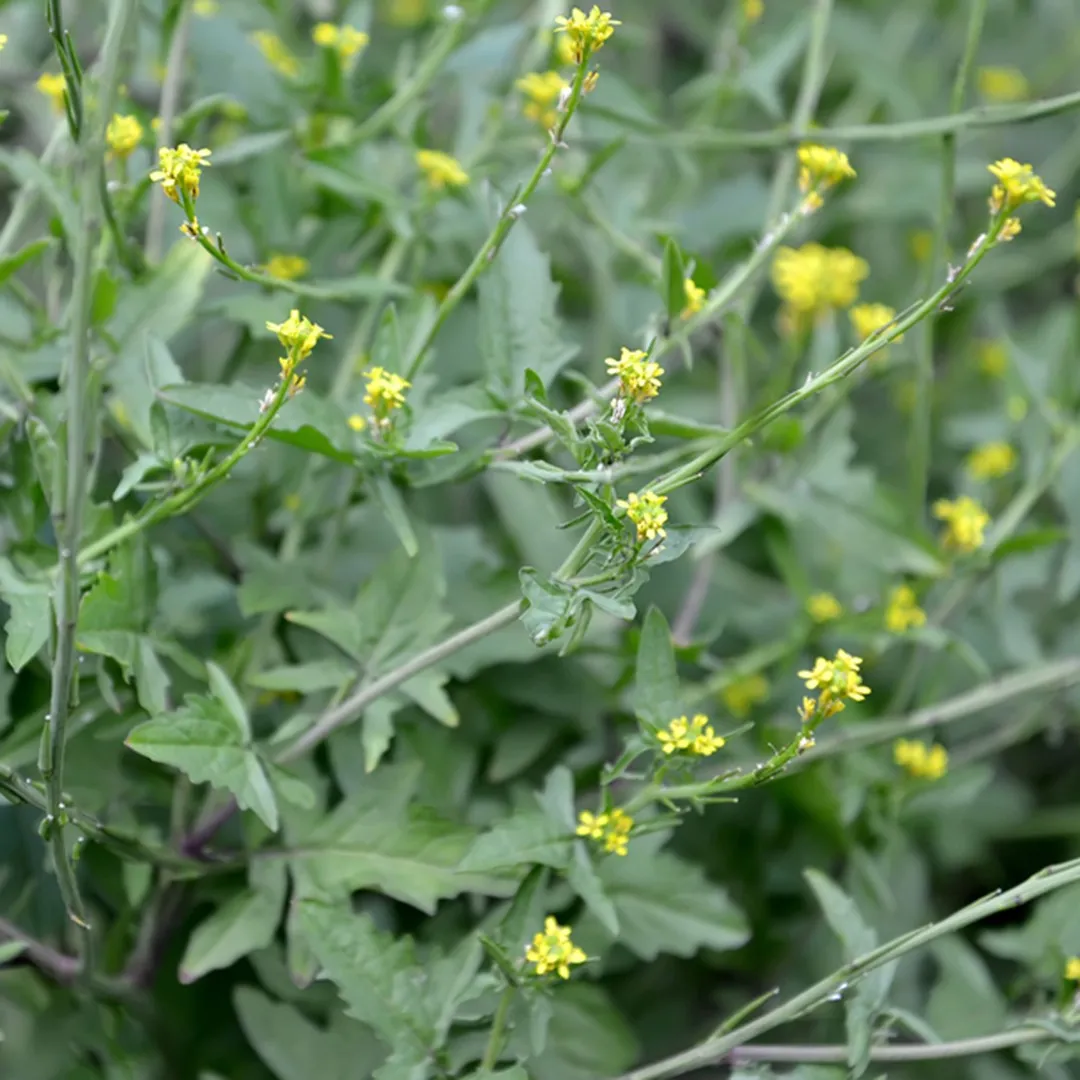
| Wild mustard (Sisymbrium officinale) 🔗source
Uses: - Gather leaves in spring. Flowers available June to July. Seeds ripen in July and August.
- Edible leaves, flowers and seeds.
- Harvest by hand in spring. Stems become wiry later in the season. Use snips to remove flower racemes and seeds.
- Avoid collecting near busy roads as plant is adept at uptaking heavy metals.
- Leaves taste somewhere between cabbage, broccoli and mustard greens.
- Use raw in salads or cooked as a potherb. Eat young shoots raw or cooked. Eat seeds raw or cooked or grind into a powder and use as a gruel or a mustard condiment.
|
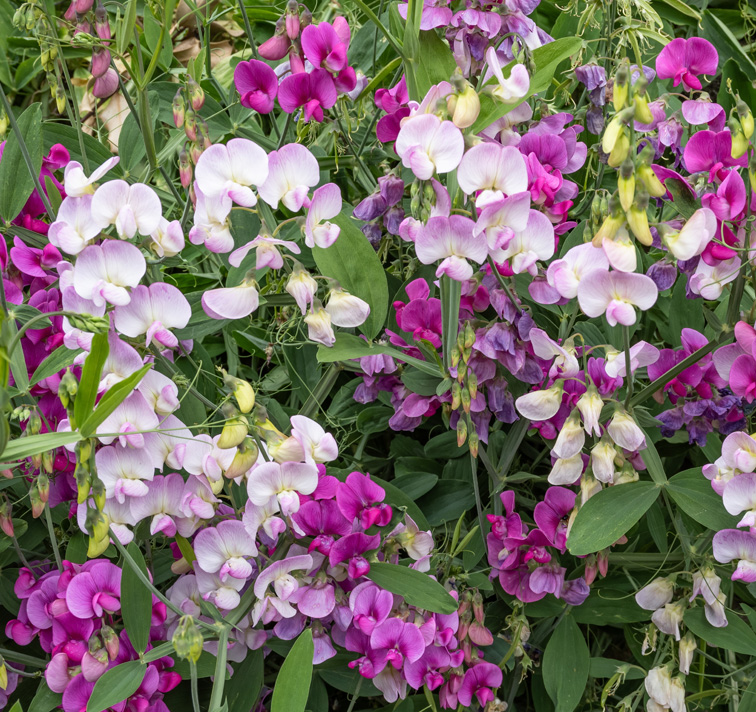
| Wild pea (Lathyrus latifolius) 🔗source
Uses: - Pick young greens and flower buds in May and June. Gather flowers in late June and July. Harvest peas in August and Sepotember.
- Edible flower buds, flowers, shoots, tendrils and seeds.
- Greens taste like snap peas. Flower buds taste similarly but have an added flowery note not unlike orange blossom water. Peas taste like garden peas.
- Steam or boil peas. Eat buds, tendrils and flowers raw in salads, lightly steamed, sauteed or stir-fried. Loses color during cooking.
- Warning: Garden sweet peas (Lathyrus odoratus) can be toxic. Differentiate by smelling them. Lathyrus odoratus is heavily scented and Lathyrus latifolius is nearly scentless.
|
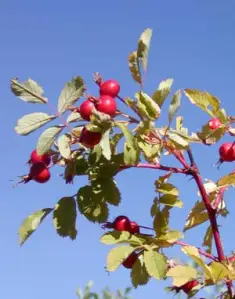
| Wild rose (Rosa spp.) 🔗source
Uses: - Rose petals are edible.
- Buds are edible.
- Young shoots are edible.
- Young leaves are edible.
- Fruit (hip) of the plant is edible.
- Hips can be eaten fresh or dried for storage.
- Only the outer shell of the rosehip is edible, discard the mass of hard, hairy seeds.
- varieties in the PNW are Arkansas rose (Rosa arkansana), Prickly wild rose (Rosa acicularis), Prairie rose (Rosa woodsii), Baldhip rose (Rosa gymnocarpa) and Nootka rose (Rosa nutkana).
- Grows in plains, foothill, mountainous and subalpine regions.
|
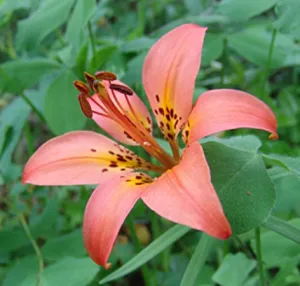
| Wild lily (Lilium philadelphicum) 🔗source
Uses: - Flowers, seeds and bulbs are edible raw.
- Bulbs are best when boiled in two changes of water, though still bitter/peppery.
- Cooked bulbs can be dried whole or mashed and dried for storage.
- Grows in moist areas in plains, foothills and mountainous regions.
|
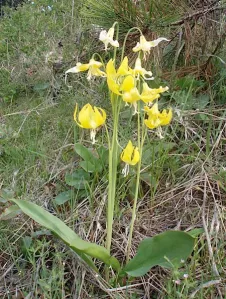
| Yellow glacier-lily / snow-lily (Erythronium grandiflorum) 🔗source
Uses: - Bulbs are edible raw.
- Bulbs are best after long slow cooking, which turns them chocolate brown.
- Bulbs can be dried for storage after cooking.
- Dried bulbs are soaked and then boiled or steamed.
- Leaves are edible raw.
- Fresh green seed pods can be cooked, taste like string beans.
- Grows in moist areas with rich soil in mountainous, subalpine and alpine regions.
- Warning: bulbs can cause burning sensation, too many can cause vomiting.
- Warning: Do not confuse with poisonous members of the lily family.
|
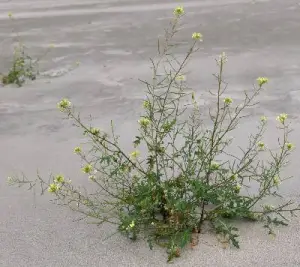
| Yellowcress (Rorippa palustris) 🔗source
Uses: - Plants are edible raw.
- Tastes like peppery lettuce or radishes.
- Can be dried for storage.
- Grows in muddily areas in plains, foothills and mountainous regions.
- Warning: Never eat plants from sites with polluted water.
|